TradesPlasterers
Build a Plastering Business That Pays You ProperlyYou can hang and set faster than anyone on site. That is not the same as running a business that pays you.
This is for the owner of a plastering business: the one still hanging sheets by day and pricing the next job at 9pm. It covers the money, the systems, the crew and the margin, so the business works as well as your finish does.

The week this is about
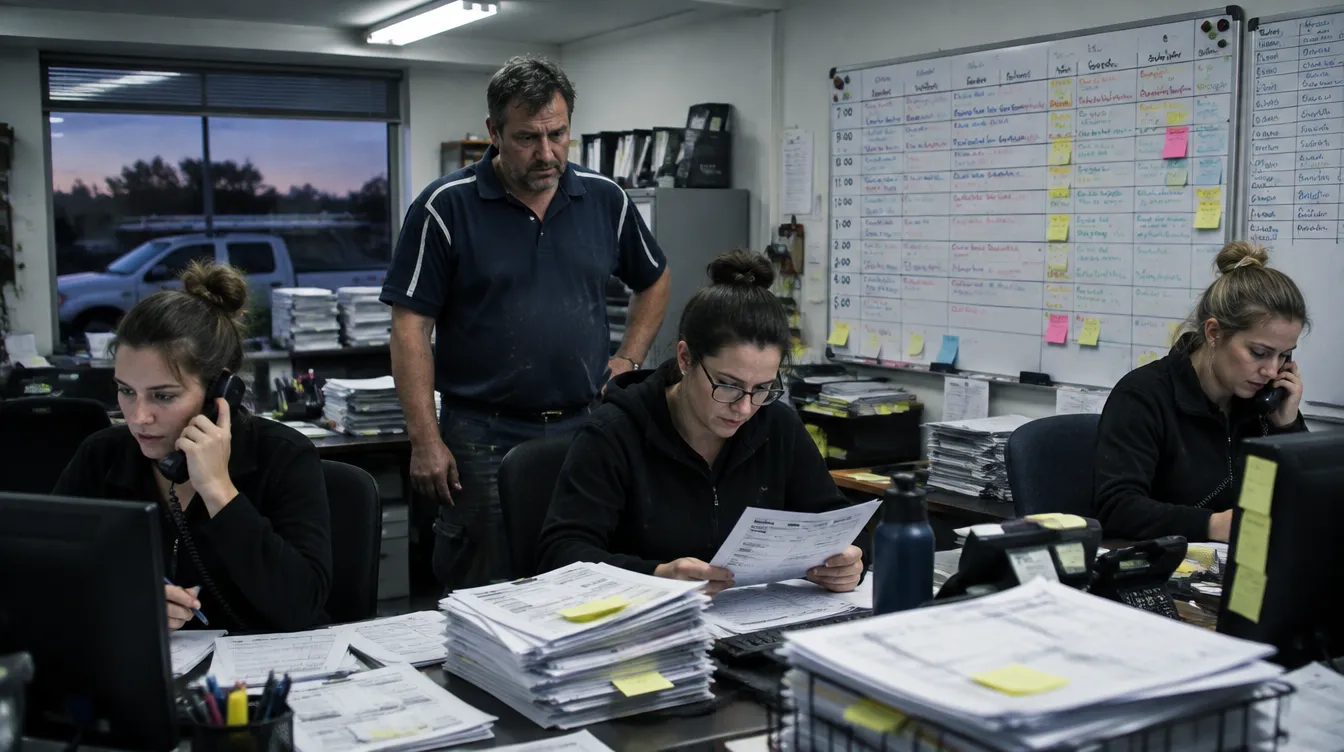
Running A Plastering Business Looks Like This.
The rate you quoted two years ago is still the rate
Sheets went up, compound went up, the ute went up. Your per square metre rate did not. You are still doing the same volume work for the same builder at a number you set before your labour cost moved twice under the award.
You wear the blame when the frame is out
The studs are bowed, the ceiling battens are out of level, and nobody says a word until the sheets are on and the joints show. Then it is the plasterer who gets called back, unpaid, to fix somebody else's setout.
The builder pays when the builder feels like it
Your progress claim went in a month ago. The site manager says it is with head office. You have already paid your crew, paid for the sheets and paid the delivery, and you are financing somebody else's job out of your own account.
Another year of this and you are still the fastest setter on site with nothing behind you: no margin, no crew you can leave, and no business worth selling.

How we help
Nine Ways We Help Plasterers.
Every one of these is a way plastering business owners get out from under the business and start running it properly. Start wherever it hurts most.
Plasterer Business Training
Structured training that turns what plasterers know on the tools into a business that runs properly.
CoachingPlasterer Business Coach
Greg Allan in your corner, holding plasterers to the plan. By application.
SystemsPlasterer Business Systems
Systems plasterers build on their own data, so the work runs properly without them standing there.
SoftwarePlasterer Business Software
Software plasterers build on their own data, instead of renting tools built for every trade at once.
Business appsPlasterer Business Apps
The simple screens plasterers build for their crew and customers, on their own data.
AIAI for Plastering Businesses
AI agents that do the office work for plasterers, their way, so people stay on customers and the crew.
Marketing and leadsPlasterer Business Marketing
How plasterers get the phone ringing with the jobs worth having, not just the cheap ones.
Pricing and profitPlasterer Business Pricing
The number plasterers should actually be charging, worked out properly rather than guessed.
Hiring and teamPlasterer Business Hiring
How plasterers build a crew that does it right without being watched.




Worth knowing
Two Things Every Plasterer Running A Business Should Know.
Plasterers sit at CW/ECW 3 under the Building and Construction General On-site Award MA000020, so your labour cost floor is set by the award, not by what a builder wants to pay.
The workplace exposure standard for respirable crystalline silica is 0.05 mg/m3, and since September 2024 the rules cover all silica-containing materials, not only engineered stone.

Why Greg
You speak to the owner who has already done it.
Greg built Response Electricians in Perth into a 30+ staff business with 1,950+ five-star reviews. A general manager runs it.
He has trained 9,000+ trade business owners across Australia and New Zealand.
He grew a coaching company to 35 staff, a CEO and 15 coaches, then cut it back so every owner deals with him directly.
Most coaching companies hand you to a salesperson, then to a coach who has never run a trade business. Here you get the owner.
What changes for you
The old way. The new way.
More customers meant more people doing the computer work, and more wages nobody invoices.

You stay with your customers and your team. The office stops landing on you.
The old way
More jobs. More paperwork. Less of the owner left.
Most trade businesses grow the same way.
More jobs means more quoting, invoicing, chasing and scheduling.
None of it gets paid for.
So the owner does it at night, after a full day on site.
Or hires an office person to do it.
The office grows. The wages grow. The margin does not.
And the owner is still the one everything waits on.
Where we take you
More work. More profit. More of you left.
The phone rings with the jobs you want, at the price you set.
You grow when you're ready, never faster than the business can carry.
Every job is priced to make money, so the busy months show up in the bank.
The best tradies in your area want to work for you, and they stay.
The chasing, the paperwork and the 9pm admin stop landing on you.
The business runs the day. You pick which parts of it you're in.
Bigger, without the headaches. Getting bigger stops meaning getting busier.
Questions
Plasterers Ask Us These.
Do I need a licence to run a plastering business in Australia?
How do I know if my plastering business is actually making money?
What do I do when a builder will not pay my progress claim?
Do the silica dust rules apply to a plastering crew?
Straight answers
Answers for Plasterers.
A new question from plastering business owners, answered every day.
Other trades
Not Your Trade?
Electricians
You are quoting at 9pm, chasing a builder for progress claims, and still on the tools.
See how we helpPlumbers
You are still taking the 2am blocked drain call, because nobody else in the business can.
See how we helpBuilders
Carrying the cost escalation, the unsigned variations and the progress claim nobody has paid.
See how we helpCarpenters
You can frame a house in a week. Getting paid for it takes months of chasing.
See how we helpHVAC Technicians
Flat out through summer, dead through winter, and the licence paperwork never lets up.
See how we helpRoofers
Hail week fills the diary, the wet week empties it, and the margin lands wherever it lands.
See how we help
Join the Waitlist to Work With Greg.
The Crew, daily Q&A and starter courses. Free for trade business owners. No card, no trial clock.
The Academy is at full capacity. Join the waitlist and when a place opens, Greg interviews the owners who look like the right fit.