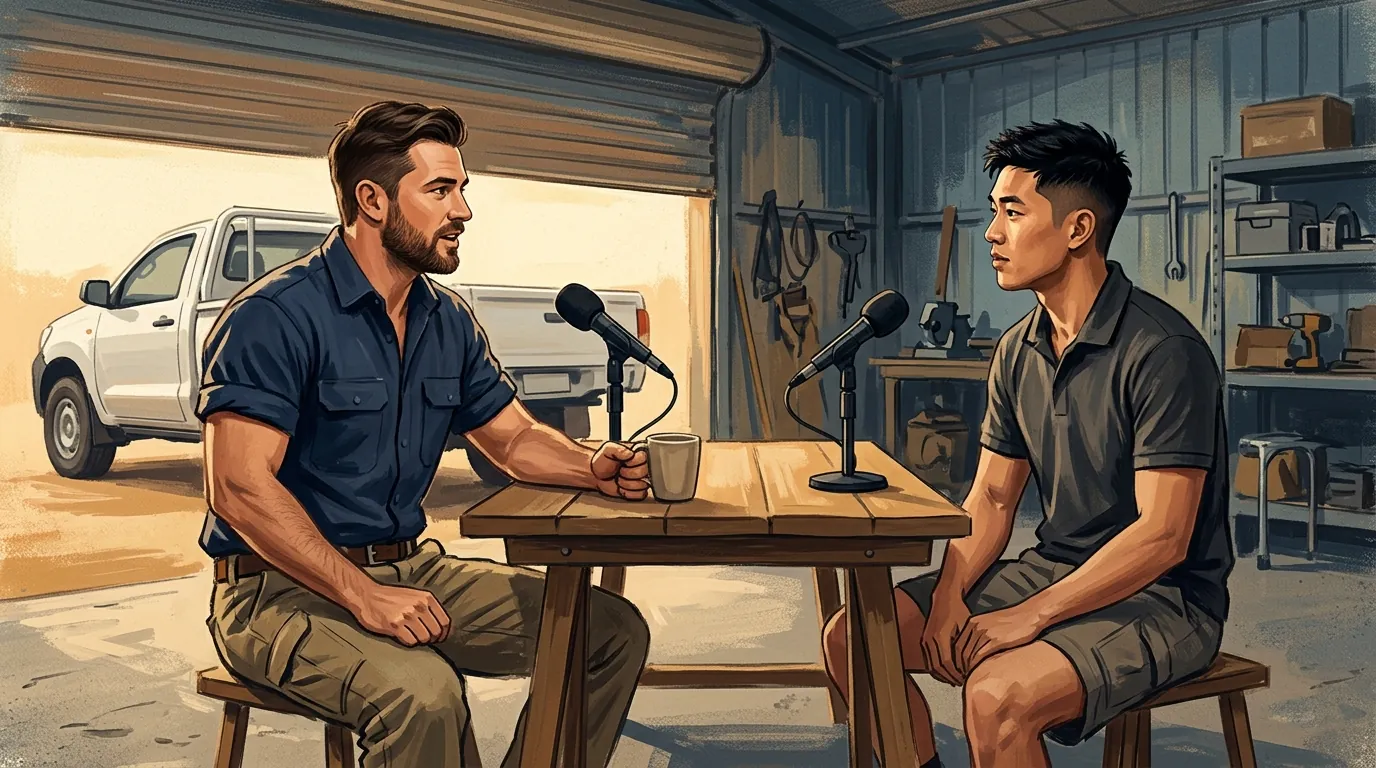
Workwear in the Trade Industry with KingGee

Episode

Listen Everywhere

Still Figuring It Out on Your Own?

Tradies Success Academy gives you the frameworks, systems, and coaching to build a business that works without you.

WORKWEAR IS YOUR WALKING BILLBOARD

Most trade business owners think of workwear as a compliance requirement. Something you buy because you have to, replace when it falls apart, and give no further thought. The smart operators think of it as a branding and recruitment tool. This episode with KingGee explores how the right workwear strategy can reinforce your brand, attract better staff, and project professionalism that wins jobs before you even submit a quote.

When your team shows up to a customer's home or a commercial site, the first impression is visual. Matching, clean, branded workwear communicates professionalism, organisation, and attention to detail. A crew in mismatched clothes and faded high-vis communicates the opposite. That impression influences whether the customer trusts your quote, recommends you to others, and pays on time. It happens in the first 10 seconds, before a single word is spoken.

KingGee has been in the Australian trades for over 90 years. They understand the unique demands of trade workwear: durability, comfort in extreme heat, compliance with safety standards, and the practical reality of crawling through roof spaces and digging trenches. This conversation covers what to look for, what to avoid, and how to use workwear strategically as a business tool, not just a compliance checkbox.

The connection between workwear and business performance is more direct than most owners realise. Teams that look professional tend to act more professionally. There is well-documented research on the psychology of uniforms. When people wear a uniform that represents a standard, they tend to perform to that standard. It is not magic. It is human behaviour. And it costs less than most marketing campaigns.

93%
Of Customers Judge Professionalism On Appearance
$1,200
Average Annual Workwear Cost Per Employee
2.5x
Longer Lifespan With Quality Workwear

TURNING WORKWEAR INTO A BRAND STRATEGY

At Response Electricians, branded workwear is not an expense. It is a marketing investment. Every team member is a moving advertisement. Branded shirts, branded vehicles, and consistent presentation across every touchpoint. Customers recognise the team before they even knock on the door. That recognition builds trust, and trust wins work. The team looks like they belong to something, and customers want to hire businesses that look like they have their act together.

The system is straightforward. Choose one workwear supplier. Standardise the kit. Every team member gets the same shirts, pants, boots, and PPE. Branded with your logo, in your colours, replaced on a schedule. No exceptions. No personal choices that dilute the brand. The cost is minimal per person, typically $1,200 per year, but the impact on customer perception is significant and ongoing.

The recruitment angle is equally powerful. Tradespeople want to work for professional operations. When potential hires see your team in matching, quality gear with branded vehicles, it signals that this is a real business with real standards. That visual professionalism attracts a higher calibre of applicant. People want to be part of something that looks and feels like a premium operation, not a one-man band.

Think about the last time you saw a trade team on a job site. The crew in matching gear with clean vehicles looks like a company. The crew in random clothes with unmarked utes looks like a group of subcontractors. One of those teams can charge premium rates. The other competes on price. The workwear is not the only difference, but it is the most visible one to every customer and every potential hire who drives past your job site.

"

Your team's appearance is the first thing every customer sees. Make sure it says what you want it to say.

THE PRACTICAL WORKWEAR SYSTEM

Building a workwear system does not need to be complicated. Start with five decisions and stick to them. These five choices, made once and enforced consistently, create a professional presentation that compounds every day your team is in the field.

1. Choose a supplier and stay with them. Consistency matters more than finding the absolute cheapest option. Mixing brands means different fits, different colours fading at different rates, and a patchwork appearance that undermines the whole point. Pick one supplier who can handle your volume, your branding requirements, and your reorder frequency.

2. Set a replacement schedule. Shirts every 6 months. Pants every 12 months. Boots when they are worn beyond the safety standard. Do not wait for gear to look terrible before replacing it. A scheduled refresh keeps your team looking professional year-round and means you can budget for it rather than dealing with surprise costs.

3. Make it a condition of employment. Wearing the uniform correctly is not optional. It is part of the job. State it in the employment contract. Cover it in onboarding. Enforce it consistently. Your brand standard depends on every team member presenting the same way, every day.

4. Invest in quality over price. Cheap workwear lasts half as long, is less comfortable in Australian heat, and looks unprofessional faster. The cost difference between budget and quality workwear is typically $15-20 per item. Over a year, that is negligible. Over the life of the garment, quality is actually cheaper because it lasts 2-3 times longer and your team actually wants to wear it.

5. Get feedback from your team. They wear the gear 40+ hours a week in Australian conditions. If it is uncomfortable, too hot, or impractical for the physical demands of the job, they will find ways to not wear it properly. Choose workwear your team actually wants to put on every morning. That means prioritising comfort and function alongside appearance. The best-looking uniform in the world is useless if your team hates wearing it.

Key Topics

Want Personalised Guidance?

Get 1:1 coaching to scale your trade business faster. Join the Freedom Fighter program for hands-on support from experienced trade business coaches.

Ready to Build a Business That Works Without You?

Find the right program for your trade and your stage of growth.

What to Do Next, Based on Where You Are

This episode applies differently depending on your business stage. Here is the specific action for each phase.

Get weekly financial visibility in place before anything else. 30 minutes every Friday: what came in, what went out, what is your margin. Build the habit first, then layer systems on top. Start in the Learning Hub .

Your first hire for freedom is a qualified tradesperson, not an apprentice. Cost every job before you quote. Track hours against every job. Follow the scaling loop — proactive hiring, never reactive.

Delegate the weekly numbers review to your operations manager. Your job is now strategy and work generation. Systemise the Financial Visibility Loop so it runs without you.

Dashboards, not spreadsheets. Margins tracked per job, per team, per division. Hire decisions backed by data. You are optimising a machine, not building one. If you are still firefighting, the system is broken.

What to Do Next, Based on Where You Are

This episode applies differently depending on your business stage. Here is the specific action for each phase.

Foundation

Sole Trader, 0 to 2 Staff

Get weekly financial visibility in place before anything else. 30 minutes every Friday: what came in, what went out, what is your margin. Build the habit first, then layer systems on top. Start in the Learning Hub.

Growth

3 to 8 Staff, Off the Tools

Your first hire for freedom is a qualified tradesperson, not an apprentice. Cost every job before you quote. Track hours against every job. Follow the scaling loop — proactive hiring, never reactive.

Expansion

8 to 15 Staff, Building Leadership

Delegate the weekly numbers review to your operations manager. Your job is now strategy and work generation. Systemise the Financial Visibility Loop so it runs without you.

Scale

15+ Staff, Autonomous Business

Dashboards, not spreadsheets. Margins tracked per job, per team, per division. Hire decisions backed by data. You are optimising a machine, not building one. If you are still firefighting, the system is broken.

The frameworks in this episode are the same ones members use inside Tradies Success Academy.

Find the right program for your trade and your stage.

Ready to upgrade your business? View All Programs Ready to upgrade your business? View All Programs