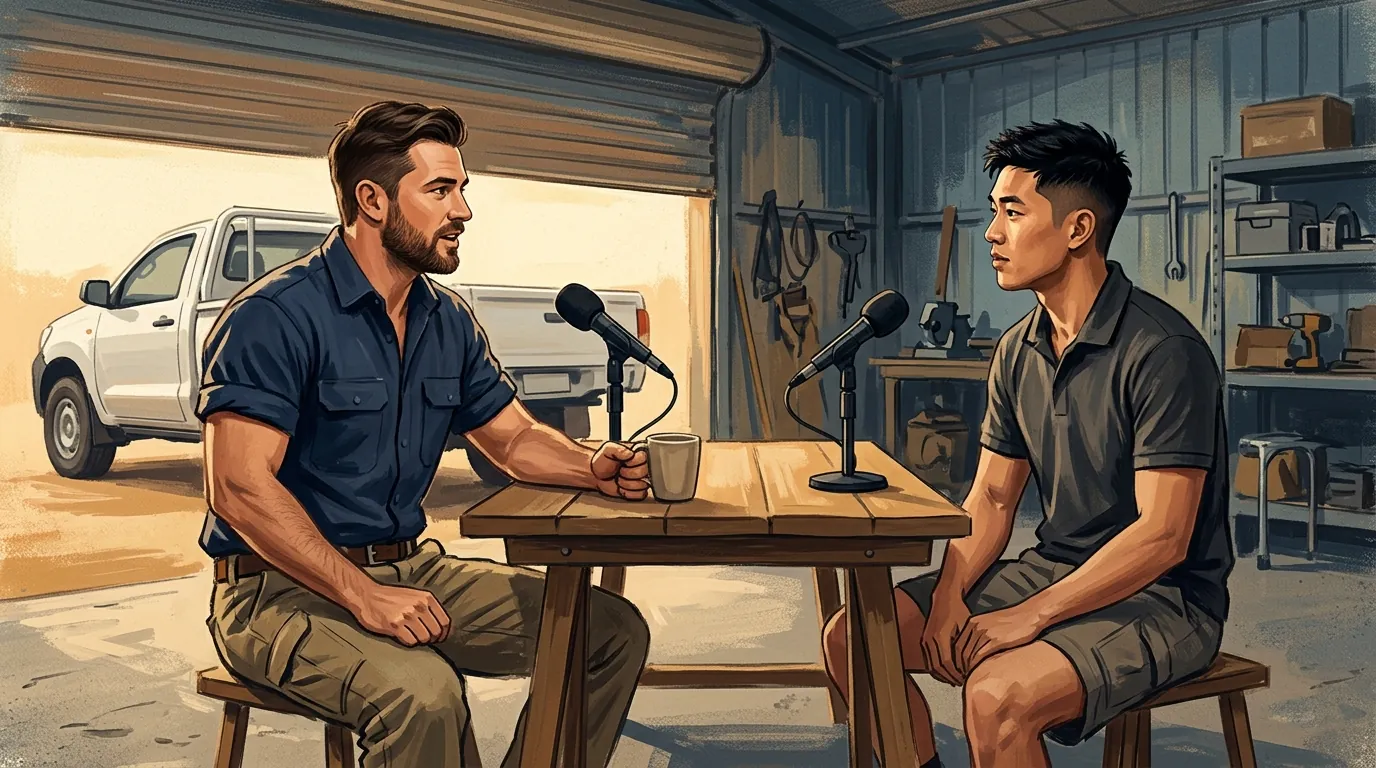
How Andrew Built Discover Electrical Instead of Staying Busy
Andrew Hicks came to the Incubator with 15 years of operations management experience. He'd managed gyms, explored pre-business ventures, and built a background in systems thinking. He wasn't desperate. He wasn't betting the farm on week one. What separated him from most tradies was deliberate investment: three months of focused learning before he earned a single dollar from Discover Electrical.
That decision — learning before launching — changed everything. Most trade owners stay on the tools because they're afraid to delegate. They haven't built systems. They don't have a hiring culture. Andrew did the opposite. He used the Incubator not as a business launch pad, but as an apprenticeship in scaled leadership. The safety trap isn't caution. It's staying busy instead of getting strategic. Playing it safe means endless hours on the tools. Playing it smart means building the business while you're still small enough to get the systems right.
The numbers look impossible. Three months of learning. Zero external capital. Week two: A-grader electrician hired. Month six: six staff. Growth like that doesn't happen by accident. It happens when the owner isn't playing it safe. It happens when strategy leads, not fear.
Andrew's Timeline: From Solo to Scaled in 6 Months
Andrew on the tools, testing systems, learning the business. No team. No safety net. Just proof that the model works.
Found an electrician worth hiring. Brought them in despite only seven weeks of cash runway. Confidence in the system beats waiting for perfect conditions.
Test the hire. Does this person share the culture? Do they deliver quality? Are margins holding? The answers determine the next scale push.
Scaled to a full team. Margins intact. Andrew off the tools. Systems proving themselves at scale.
My goal was to get to a full-time admin as fast as possible so I could get off the tools. I knew that hiring great people first — A-graders who could set the culture — was the only way that worked. You can't cheap out on your first hires. That's when you're building the culture that scales.
Playing it safe would've meant waiting. Waiting for more capital. Waiting for a perfect hire. Waiting until the business felt "ready." Andrew didn't wait. He moved because he had a framework. He'd learned it before he launched. He knew what scaled leadership looked like before he needed to scale.
Tradies Success Academy gives you the frameworks, systems, and coaching to build a business that works without you.
What People Said vs What Andrew Actually Did
Every founder who scales fast gets pushed back. "You should stay on the tools." "You're not a real electrician if you're not in the van." "You're abandoning the work." Andrew heard it from people he respected. It stung. It tested him. But he'd already made the decision from a position of knowledge, not fear.
This is the shift that separates owners from operators. Operators stay on the tools. Owners build teams that run without them. Andrew chose owner. The criticism faded once the results came. Six people. Growing margins. Andrew working less, earning more. The proof silences doubt.
Andrew's Non-Negotiables for Sustainable Growth
Andrew doesn't frame self-care as wellness fluff. He frames it as business strategy. If the owner burns out, the business stops. If the owner is depleted, leadership fails. If the owner can't think clearly, decisions get made from exhaustion instead of strategy. That's not sustainable. That's survival mode masquerading as business.
That's why Andrew built non-negotiables into his week. Five or six in the morning, he trains. He describes his bucket metaphor: you can't pour from an empty cup. A monthly toolbox meeting. Monthly one-on-ones with each team member. Time for thinking. Time for recovery. Time for connection. These aren't luxuries. They're load-bearing parts of the business.
Most owners skip these things. Too busy. Too many jobs. Too much pressure. Andrew does them because they're the foundation of a scaled business. You can't scale past your own capacity unless you're rested, clear, and connected to your people. The 5 AM training isn't about fitness. It's about clarity. Toolbox meetings aren't about wasting time. They're about culture. One-on-ones aren't nice-to-haves. They're the early warning system for problems.
Find the right program for your trade and your stage of growth.
The System That Turned Three Months of Study into Six Months of Growth
Andrew's journey follows a pattern. Learn first. Build systems while small. Hire deliberately. Trust the framework. Scale fast because the foundation is solid. This isn't unique to electrical contracting. It applies to every trade business that wants to grow beyond one owner working 60 hours a week.
Most tradies reverse the order. They start a business. Then they learn. Then they hire. Then they try to scale. By that point, the systems are broken, the culture is accidental, and the owner is exhausted. Andrew proved there's a better way. Learn the systems. Understand what scaled leadership looks like. Then execute fast.
Playing it safe means staying on the tools. It means staying busy instead of getting strategic. Andrew played it smart. He invested time before money. He hired people before he needed them. He built systems before they became urgent. That's what real growth looks like. Not faster hours. Smarter hours.
This episode applies differently depending on your business stage. Here is the specific action for each phase.
Get weekly financial visibility in place before anything else. 30 minutes every Friday: what came in, what went out, what is your margin. Build the habit first, then layer systems on top. Start in the Learning Hub .
Your first hire for freedom is a qualified tradesperson, not an apprentice. Cost every job before you quote. Track hours against every job. Follow the scaling loop — proactive hiring, never reactive.
Delegate the weekly numbers review to your operations manager. Your job is now strategy and work generation. Systemise the Financial Visibility Loop so it runs without you.
Dashboards, not spreadsheets. Margins tracked per job, per team, per division. Hire decisions backed by data. You are optimising a machine, not building one. If you are still firefighting, the system is broken.
This episode applies differently depending on your business stage. Here is the specific action for each phase.
Get weekly financial visibility in place before anything else. 30 minutes every Friday: what came in, what went out, what is your margin. Build the habit first, then layer systems on top. Start in the Learning Hub.
Your first hire for freedom is a qualified tradesperson, not an apprentice. Cost every job before you quote. Track hours against every job. Follow the scaling loop — proactive hiring, never reactive.
Delegate the weekly numbers review to your operations manager. Your job is now strategy and work generation. Systemise the Financial Visibility Loop so it runs without you.
Dashboards, not spreadsheets. Margins tracked per job, per team, per division. Hire decisions backed by data. You are optimising a machine, not building one. If you are still firefighting, the system is broken.
The frameworks in this episode are the same ones members use inside Tradies Success Academy.