What does running 30 staff with no systems actually look like?
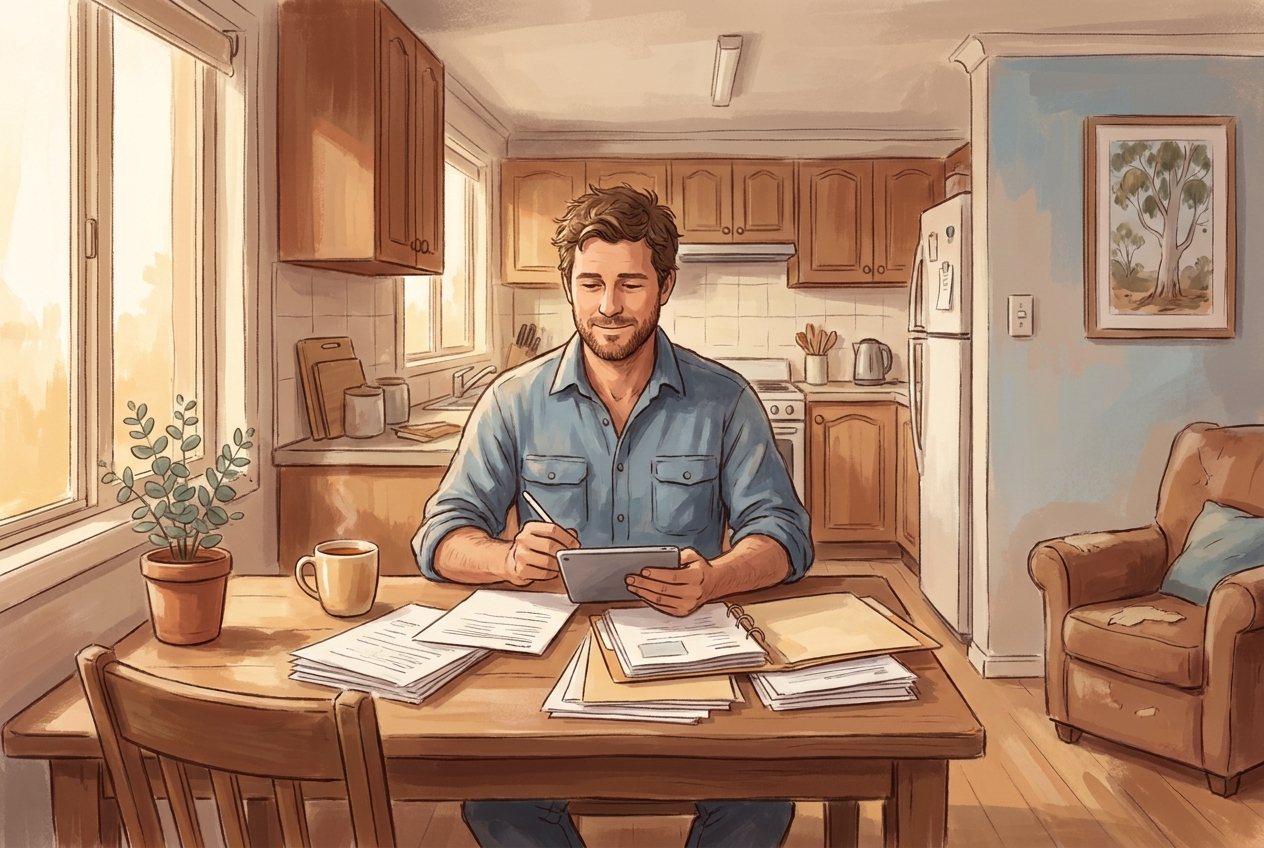
Adam Taylor built AT Electrical in Perth from a one-man start in 2004 to nearly 30 people at its peak. He had one administration person and attempted to bring in a supervisor who did not work out. Everything else came back to him: quotes, scheduling, site issues, builder messages from five in the morning, and paperwork through until eight or nine at night.
He describes it as being the one-stop shop for everything, with no structure and no backing. The business grew, but he never experienced the freedom he started the business to find.
Why does being the bottleneck exhaust you even when the business is busy?
When you have no processes to delegate or automate decisions, every extra person you hire creates more demand on you, not less. Adam says he was doing the general manager role, the operations role, and still getting on the tools himself at times. The pressure was relentless and left no space mentally, even when he was physically present at home.
He was not switching off. The time he did give to family he was not giving fully, because the business was still running in his head. That mental absence, he says, slowly changes you as a person. You become short-tempered, you pick up bad habits, and the family ends up carrying the weight of it.
What actually causes a trade business to collapse under its own growth?
Adam describes it as a ten-pronged attack rather than one single event. Cash flow tightens, tax payments get delayed, you start moving materials between suppliers to keep work moving, and it all accumulates until you are pushed into a corner. As a company director, once the accountant tells you that you cannot trade insolvent, the line is drawn.
His reflection is that there was no one to grab him on the way down, because he had not built anything behind him that could. The wheels come off fast, he says, even when it took fifteen years to build what you had.
What specific things made the difference when rebuilding with structure?
Adam points to several concrete changes in the way he runs the business now.
- Brain dump into a task management tool. At the end of each day he gets everything out of his head and into Asana, organised and ready for the next morning. This lets him switch off at night without losing track of what needs doing.
- Automation to handle after-hours customer contact. Instead of taking calls at ten at night and then lying awake thinking about them, automated responses handle customer needs while he is in home time.
- Understanding cost of operations and pricing. In the previous business he did not know whether his charge rate was covering costs. Now he knows his cost of operations, what his charge-out rate needs to be to make money, and he presents customers with a per-item guaranteed price rather than an hourly rate. This removes the uncomfortable conversation about hourly rates and gives customers cost certainty.
- Reading financials properly. He now understands how to read a profit and loss statement and a balance sheet, which he did not in the previous business. He describes it as having a scorecard that tells you whether you are making money, charging enough, and running efficiently.
- A different approach to leadership. He was brought up with an old-school style of management and has changed how he listens to and treats the people who work for him, recognising that what this generation of workers needs is different.
How do you protect your home life once you have those systems in place?
Adam uses the image of a nest with walls around it. The walls are processes and automation that mean the business can keep running and customers can have their needs met without him having to be the one doing it in his personal time.
His set end-of-day routine means he arrives home knowing exactly what is waiting for him tomorrow. He is not woken up worrying about unresolved issues. He says his sleep is now solid, he is getting to the gym, and he shows up at work the next day ready to give his best to his team and his clients.
What would Adam tell a trade business owner who is struggling right now?
The biggest thing he found in the hard period was loneliness and not asking for help. His advice is simple: ask for help the moment you feel you need it. Do not run from the problem.
He also talks about developing a habit of checking in with yourself when anxiety or pressure builds. Recognise what is happening, find the solution, act on it, and move forward. Combined with looking after yourself physically, eating properly, and exercising, he says this slowly brings the pressure down and makes the difficult moments shorter and easier to move through.