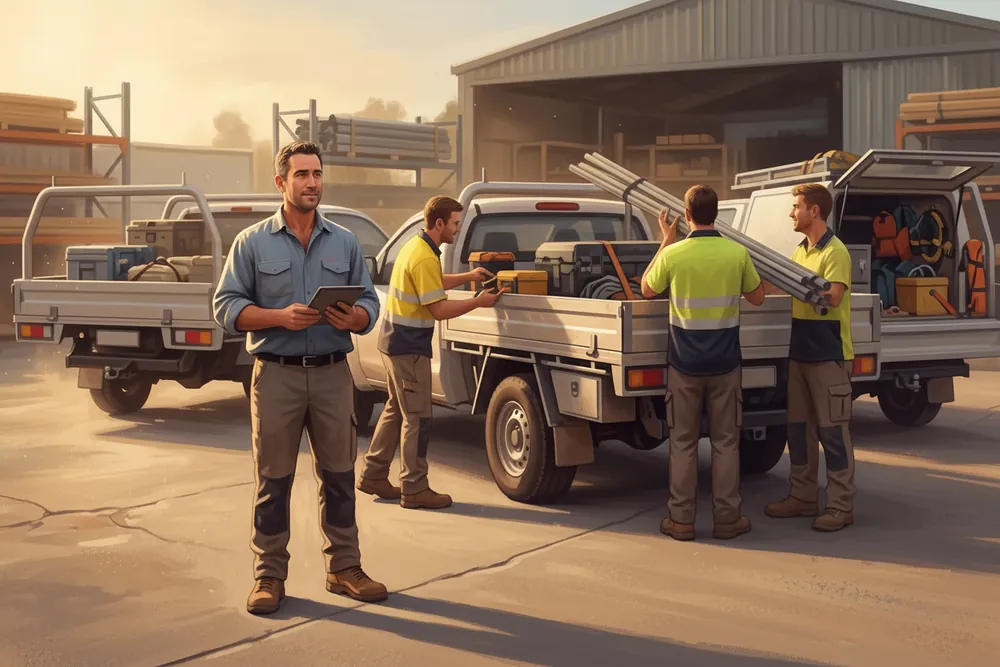
Why does hiring your first tradie feel like instant relief?
When you hire your first tradie, you hand over roughly 40 to 50 hours of on-the-tools work. That creates immediate space to catch up on invoicing, quoting, scheduling, and parts ordering. For the first time in a while, you can actually breathe and get on top of everything.
Your new hire can also get through the same work faster than you could, because as a business owner on the tools you are running at about 50 to 60 per cent billable efficiency. Phone calls, booking jobs, ordering parts, and unbillable travel all chip away at your productive hours.
Why does growth kick in as soon as you make that first hire?
Once your ops, admin, and on-the-tools load is cleared, you have time to follow up quotes and do marketing. That shift matters because sales and marketing activity will lead to growth every time. It does not matter whether you cleared space by hiring or because a quiet period forced you back into the office. The moment you focus there, the work comes in.
This is the pattern: pour your full glass into a new team member's empty glass, create space for yourself, then use that space to generate work.
What happens after that first wave of growth?
The growth you created pulls you back on the tools. Before long you are doing 30 to 40 hours on the tools again, plus invoicing, ops, and admin, and there is no time left for sales and marketing. The business stalls until you hire another tradie and repeat the cycle.
The ceiling of the growth phase hits when you are no longer on the tools but you are still buried in quoting, invoicing, scheduling, and admin all day. At that point, around two to three tradespeople, you simply cannot get to the sales and marketing that keeps things moving.
How do you break through that ceiling?
The way out is hiring a full-time admin person. You pour your 20 or so hours of admin work into their 40-hour capacity, then keep asking what else you can give them. Prepping invoices, prepping quotes, handling marketing tasks. You will fill their capacity, and that frees you to lead rather than do.
Once that admin hire is in place, you move out of the growth phase and into the expansion phase, building across multiple roles. The step after that is an ops manager, which is where you reach genuine operational time freedom.
What mistakes will kill your business during this phase?
Greg identifies three common ones:
- Thinking that hiring alone is the answer. If you do not have systems and team culture in place first, bringing on more people will cause the business to implode.
- Hiring poor quality people. Poor quality hires produce poor quality results.
- Staying buried in admin and letting the business run you instead of the other way around.
The systems you build during the growth phase are the foundation for everything that comes after. There are no band-aid fixes here. Getting this right is what separates businesses that scale from ones that stay stuck.
What does the growth phase actually prepare you for?
The goal is to go from feeling overwhelmed to being genuinely in control. That means streamlining your operations so the team runs without you having to be everywhere, building a team you can trust so you are not doing everyone's job for them, and developing real leadership skills rather than just managing a bigger crew.
The reward for getting through it properly is more revenue, more profit, and the freedom you started the business for in the first place.