Why does the life vision come before the business plan?
Most people start a trade business thinking they will end up with more time and money, but they never get specific about what that actually means. Without a clear picture of the life you are building towards, you have no way of knowing whether your business decisions are taking you closer to it or further away. The vision is the North Star. The business gets built to reach it.
Greg started his electrical business at 22 with a clear intention: to build something that would give him time freedom when he had kids. Even so, without the right systems in place, he got there physically but not mentally. He was present in body but still carrying the weight of the business in his head, and that showed up in every relationship around him.
What should your vivid vision actually include?
Write it as though you are already living it. If your kids are one and three today, write from five years in the future when they are six and eight. What school are they at? How are you showing up for them? How often are you seeing friends? Are you at the gym, competing in sport, running somewhere you have always wanted to go?
Do not focus on business metrics at this stage. Greg is specific about this: do not worry about how many staff you will have, how many vans, or which areas you will work in. Focus entirely on the life outside the business. The business gets designed around that life, not the other way around.
The things most people are actually chasing when they dig into this exercise are:
- More time
- Less stress
- More money
- Better health and energy
- Stronger relationships
If you know that is what you want, you can build a business that produces those outcomes deliberately.
How do you actually do the journaling exercise?
Get a pen and paper, not a screen. Writing by hand creates what Greg calls kinesthetic energy, and it makes the vision stick in a way that typing does not. He still journals with pen and paper himself.
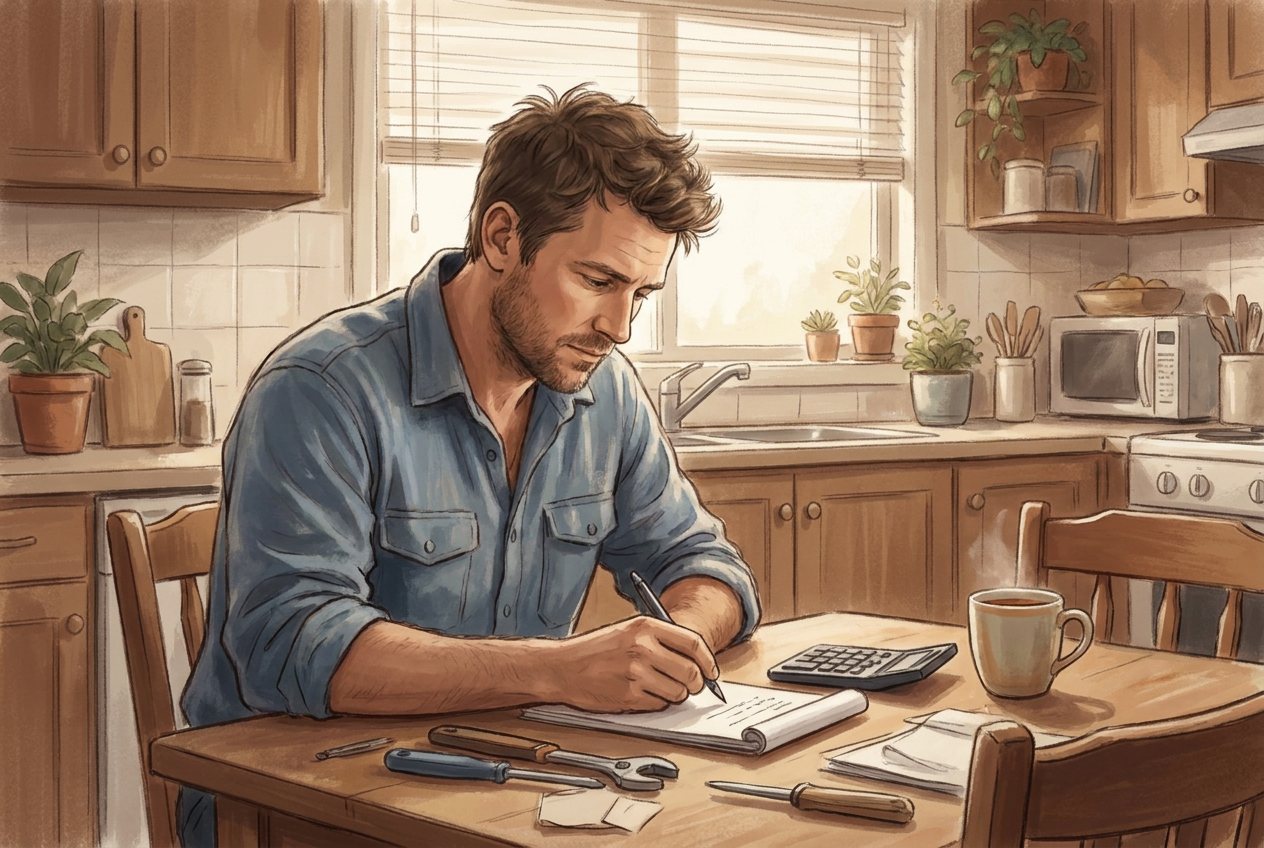
Set aside fifteen minutes to half an hour. Make a coffee, go somewhere you like sitting, put on music, and write. At the top of the page, write the future year you are projecting to. Then write in present tense as though you are already there. What do you have? What makes you happy? What does a typical day look like? Who are you with and how often?
That journal entry becomes the commitment you are making to yourself, and it becomes the reference point for every business decision you make from here.
Can you really build this faster than it took the generation before you?
Greg's own path took the better part of ten years, and a lot of that time was eaten up by trial and error. A decision that turned out to be wrong might not reveal itself as wrong for six months to a year. Those mistakes cost time, money, client relationships, and staff, on top of the personal toll of running a business unsustainably.
The shortcut is not luck. It is doing the right things in the right order: setting up systems that drive profitability, pricing for profit rather than just to win work, not pulling more money out of the business than it can sustain, building client relationships that generate genuine value, and assembling a team of people who are trustworthy and competent. Get those elements right and you can compress what took a decade into one, two, or three years.
What does handing the business over to a team actually look like?
Greg moved from Perth to Byron Bay, the other side of Australia, while his electrical business kept running. It operates with a general manager and an operations team. He speaks to the general manager once a week and has no direct interaction with the rest of the team because that is the general manager's role.
That outcome did not happen by accident. It required building systems, processes, and a team capable of running the operation without him. The gap between where you are now and that outcome is what the rest of the course is designed to close, step by step.